“Budget 2027 must deliver comprehensive Civil Legal Aid Reform”: 60-strong Coalition calls on Justice Minister to establish a fit-for-purpose, comprehensively reformed, properly-resourced civil legal aid system
24 September 2026
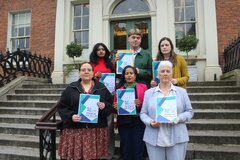
In a petition delivered to the Department of Justice today (24 September), 60 signatories are calling on the Minister for Justice to ensure that Budget 2027 provides the resources for the establishment of a fit-for-purpose and properly-resourced civil legal aid system which includes targeted and preventative legal services for disadvantaged individuals and communities.
The petition, which represents the largest ever coalition for civil legal aid reform in Ireland, was coordinated by FLAC (Free Legal Advice Centres). It is signed by 60 NGOs, Trade Unions, academics and advocates working in areas including housing and homelessness, domestic violence, disability rights, Traveller and Roma rights, migrant and refugee rights, anti-racism, LGBTQIA+ rights, and environmental rights.
The civil legal aid system is in crisis and in danger of collapse. It has a wholly inadequate and unfair means test which has not been reformed since 2006.There are legal aid ‘black spots’ in Dublin and around the country - where applicants have to wait for up to 64 weeks for a first appointment with a solicitor. The Legal Aid Board has difficulties in hiring and retaining staff because Legal Aid Board solicitors are paid less than solicitors in other areas of the civil and public services. There has been an exodus from its private practitioner scheme due to the low levels of pay, which contributes to the legal aid black spots. It also has problems in paying for essential reports such as vital child welfare reports.
The legal aid system cannot meet the needs of disadvantaged communities. It cannot provide basic legal information to people and communities about their rights, either in a general or targeted way. It cannot provide legal aid in discrimination or employment cases, or in Social Welfare Appeals and cases heard by the Residential Tenancies Board.
The review of the civil legal aid system was completed in 2025. Its minority report provides the blueprint for reform, which is doable, practical and cost effective.
Speaking in advance of the petition’s launch, Eilis Barry, FLAC’s Chief Executive, commented:
“Civil legal aid has to be treated as a vital essential public service. The Legal Aid Board desperately needs funding to operate a fair means tests, to be able to hire and retain staff, pay for vital reports, and to get rid of the waiting lists and legal aid blackspots. We welcome the Minister for Justice’s commitment to increased funding for legal aid in the next budget. It should be borne in mind that the Legal Aid Board currently receives significantly less on an annual basis than the horse and greyhound racing industries. How can that be possibly justified in terms of a vital public service?
Funding, while absolutely essential and overdue, is not enough. The diverse list of signatories to today’s petition shows the huge demand for reform of our legal aid system. It is vital that the Legal Aid Board is transformed for the first time into a fit for purpose system which brings services to the most disadvantaged communities. This requires a complete reorientation of civil legal aid services with an emphasis on general and targeted education and information services and targeted and community law centres - so that disadvantaged individuals and communities will have access to legal information, advice, advocacy and legal aid in relation to their most basic rights as early as possible.”
The Minister should urgently outline his reform and implementation plans and establish a reform implementation group as a matter of urgency.”
Shane O’Curry, Director of the Irish Network Against Racism, commented:
“INAR and its members are encountering very high and increasing levels of racism in Ireland. Despite this, victims of discrimination have no access to legal aid for complaints under equality law heard by the WRC. The Legal Aid Board has no power or function to provide minority ethnic or migrant communities with information about their rights or how to respond to experiences of discrimination. INAR often has no where to refer victims of discrimination who seek our support and who need legal assistance. It is vitally necessary that legal aid is made available in discrimination cases and that the Legal Aid Board establishes a targeted services for minority ethnic and migrant communities.”
Sarah Benson, CEO of Women’s Aid, commented:
"Every day, Women's Aid stands alongside women in the busiest family law court in the country. And every day, we see the toll of an under-resourced Civil Legal Aid system on some of the most vulnerable people who pass through it: women who have been subjected to domestic violence.
Lengthy delays. Limited access to representation. A means test threshold so outdated it locks many out entirely. Together, these failures compound into what many survivors describe as "secondary victimisation" — a system that re-traumatises the very people it's meant to protect.
The problems are well documented. The solutions are already known. What's missing is action. Government must move now to relieve an overburdened system and secure real access to justice for those most at risk."
Joe O’Brien, CEO of the Irish Council for Civil Liberties, commented:
“Civil legal aid is fundamental to ensuring access to justice for people involved in complex and sensitive legal proceedings. Financial circumstances cannot be allowed to prevent access to our justice system. Everyone should be able to access legal representation and a fair hearing before the courts, regardless of their means. Yet for many, legal assistance is increasingly out of reach.
“One year on from the publication of the Independent Review Group’s Review of Civil Legal Aid, the Minister for Justice needs to act on the Group’s detailed recommendations and begin establishing a fit-for-purpose system of public legal assistance which can meet the needs of the most disadvantaged.”
ENDS/
- The full text of the petition may be access here.
- The full list of signatories to the petition is as follows:
- Eilis Barry, Chief Executive, FLAC
- Doireann Crosson, Head of Policy, National Women’s Council
- Tanya Ward, Chief Executive, Children’s Rights Alliance
- Karen Kiernan, CEO, One Family
- Joe O’Brien, Executive Director, Irish Council for Civil Liberties (ICCL)
- Sarah Benson, CEO, Women’s Aid
- Rachel Morrogh, CEO, Dublin Rape Crisis Centre
- Mary-Louise Lynch, Director, SiSi
- Saoirse Brady, Executive Director, Irish Penal Reform Trust
- Paul Dornan, Managing Solicitor, Mercy Law Resource Centre
- Jane O’Sullivan, Managing Solicitor, Community Law & Mediation
- Katie Mannion, Managing Solicitor, Irish Refugee Council
- Catherine Cosgrave, Managing Solicitor, Immigrant Council of Ireland
- Claire McSweeney, Manager, Ballymun Community Law Centre
- Shane O’Curry, Director, Irish Network Against Racism (INAR)
- Kostas Kapanais, Interim Co-Director, NASC
- Neil Bruton, Co-Director, Migrant Rights Centre Ireland (MRCI)
- Lianne Quigley, Chairperson, Irish Deaf Society
- Joan Carthy, Head of Advocacy, Irish Wheelchair Association
- Amy Hassett, Co-Founder, Disabled Women Ireland
- Robbie Sinnott, Chairperson, Voice of Vision Impairment
- Áine Wellard, Disability Advocate
- Elaine Teague, CEO, Disability Federation of Ireland
- Derval McDonagh, CEO, Inclusion Ireland
- Wayne Stanley, CEO, EPIC
- Rebecca Gorman, Head of Media & Policy, INOU
- Marie Casey, Executive Council Member, Unite the Union
- Louise Bayliss, Head of Social Justice & Policy, Saint Vincent de Paul
- Ber Grogan, Executive Director, Simon Community
- Mike Allen, Director of Advocacy, Focus Ireland
- Oisín O’Reilly, CEO, Outhouse LGBTQ+ Centre
- Belong To – LGBTQ+ Youth Ireland
- Daire Dempsey, Executive Director, Transgender Equality Network Ireland (TENI)
- Martin Collins & Lynsey Kavanagh, Co-Directors, Pavee Point
- Maria Joyce, Coordinator, National Traveller Women's Forum
- Maureen Ward, Coordinator, Minceirs Whiden
- Jules McDonagh, Resource and Information Officer, Exchange House
- Heather Rosen, Traveller Rights Activist
- Deirdre Duffy, CEO, Friends of the Earth Ireland
- Donncha O’Connell, School of Law, University of Galway
- Dr. Charles O’Mahony, Associate Professor, University of Galway
- Dr. Maeve O’Rourke, School of Law, University of Galway
- Dr. Illan Wall, Vice Dean of the College of Business, Public Policy and Law, University of Galway
- Dr. Connie Healy, School of Law, University of Galway
- Dr. Edel Hughes, School of Law, University of Galway
- Professor Thomas O’Malley SC, Retired Lecturer of Law, University of Galway
- Dr. Fiona Donson, Senior Lecturer in Law, University College Cork
- Dr. Samantha Morgan Williams, Traveller Equality and Justice Project, UCC
- Dr. Orla Kelleher, School of Law and Criminology, Maynooth University
- Dr. Clíodhna Murphy, School of Law and Criminology, Maynooth University
- Dr. Lara MacLachlan, University of Bristol Law School
- Dr. Liam Thornton, School of Law, University College Dublin
- Dr. David Fennelly, School of Law, Trinity College Dublin
- Prof. Gerry Whyte
- Keith Walsh, Solicitor & Senior Counsel, Keith Walsh Solicitors
- Aidan Reynolds, Partner, Keith Walsh Solicitors
- Wendy Lyon, Solicitor, Abbey Law
- University of Galway FLAC Student Society
- Dublin City University FLAC Student Society
- University College Cork FLAC Student Society